Pros: – good, balanced, rounded, non-fatiguing sound
– powerful enough to drive full sized headphones (1.2W)
– filters to fine-tune sound
– simultaneous charging and listening with charge protection for desktop use
– good wireless chip
– femtosecond clock
– nice volume knob
Cons: – heavy for daily portable use (220g)
– annoyingly bright and unnecessary eight led lights that are always on or blinking
– just a Bluetooth receiver and not a transmitter (not good for wireless headphones)
– no Bluetooth multipoint; changing input devices is not always seamless
– bass enhancement makes the sound boomy and hazy
– nice aluminium finish but the surface is a shiny fingerprint and scratch magnet
Intro/Disclaimer
KeepHiFi, a Chinese audio brand reached out to me once again, and asked if I would be interested in sharing my thoughts on their new portable DAC/amp, the Tri TK3. They sent me the review unit in exchange for publishing my opinion on the product. As always, you can only read my honest thoughts and findings. I am not affiliated with the brand.
My main interest in the hobby lies with full sized, high-end headphones and desktop (tube) amplification. My experience is limited when it comes to current portable devices like the TK3 or IEMs. I told this to KeepHiFi before they sent me the device, but they asked me to share my thoughts anyway. There won’t be as many comparisons to similar products in this review as I normally like to have, but I still used to own devices like the Chord Mojo, Questyle M15i, Cayin RU6 or iFi Diablo, so I am able to position the TK3 on the market.
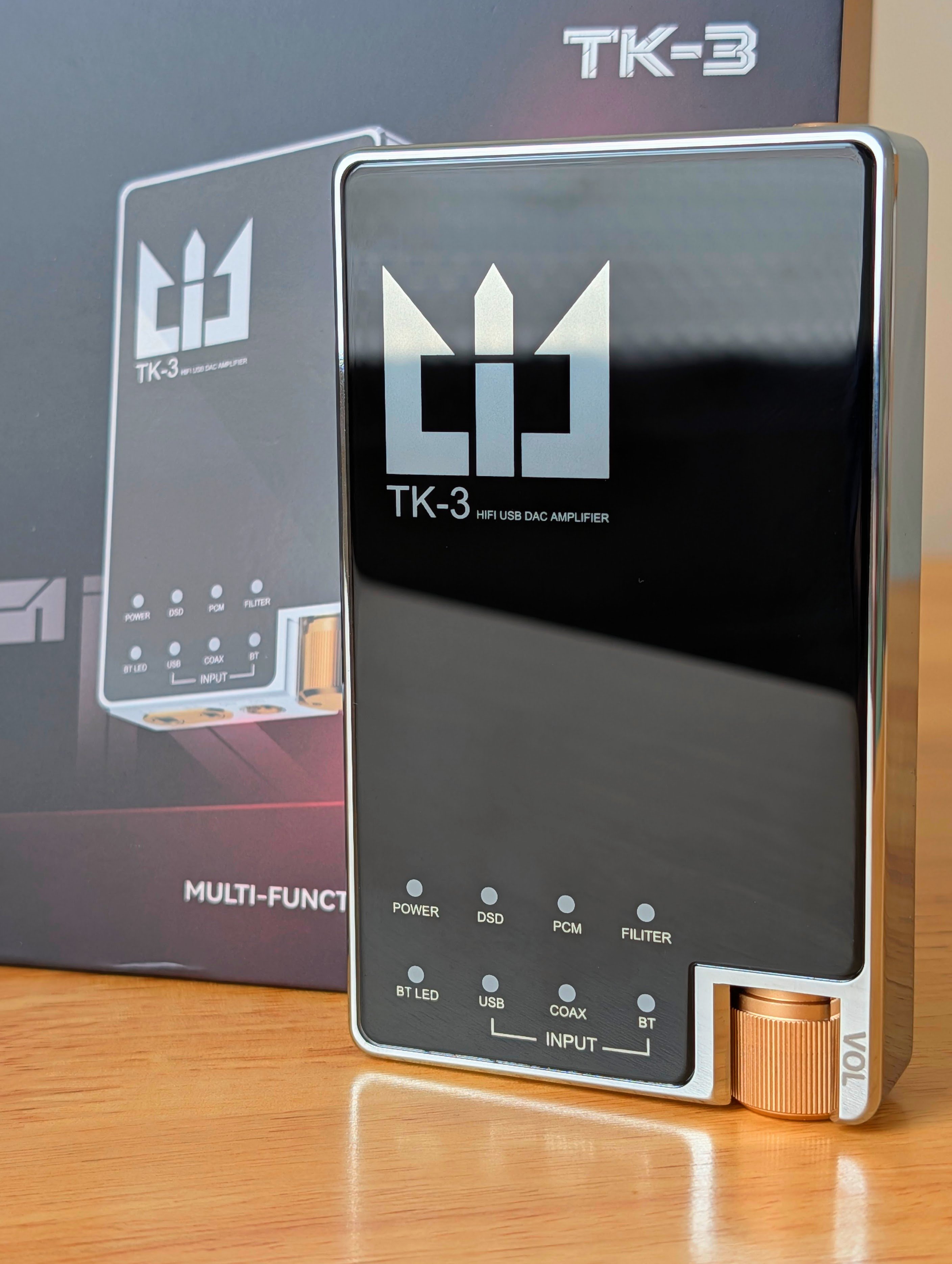
What is the Tri TK3?
KeepHiFi owns three brands: Tri, KBear and CCZ but they are also distributors for other brands. Their main focus is budget IEMs from $10 (!) to $250 with several models. Last year I reviewed two of their flagship IEMs, the Tri I3 MK3 and Kbear Cepheus.
Their TK3 flagship DAC/amp is a refined and improved version of their TK2 which was released around four years ago. They refined the output stage, which allows the unit to drive different IEMs/headphones better. There was improvement in gain staging too, which led to lower noise floor, better IEM compatibility, cleaner background and more stable loads.
Tech spec
– dual ES9039Q2M chips
– femtosecond crystal oscillator
– Qualcomm QCC Bluetooth chip (5.4): this Bluetooth chip allows transmission at 96kHz/24bit and compatible with all popular formats (LDAC, aptX-HD, aptX Adaptive, LHDC and more)
– in USB mode, the ESS chips can do 32 bit/768kHz PCM and DSD512 if you ever need it
– 5000mAh battery
– 18W charging
– Texas Instruments OPA2211 amplifier
– ADC volume control (analogue to digital)
– max output power: 1200mW at 32 ohm
– max output voltage: 10V
– USB and Coax input
– size: 7 x 11 x 2cm
– weight: 220g
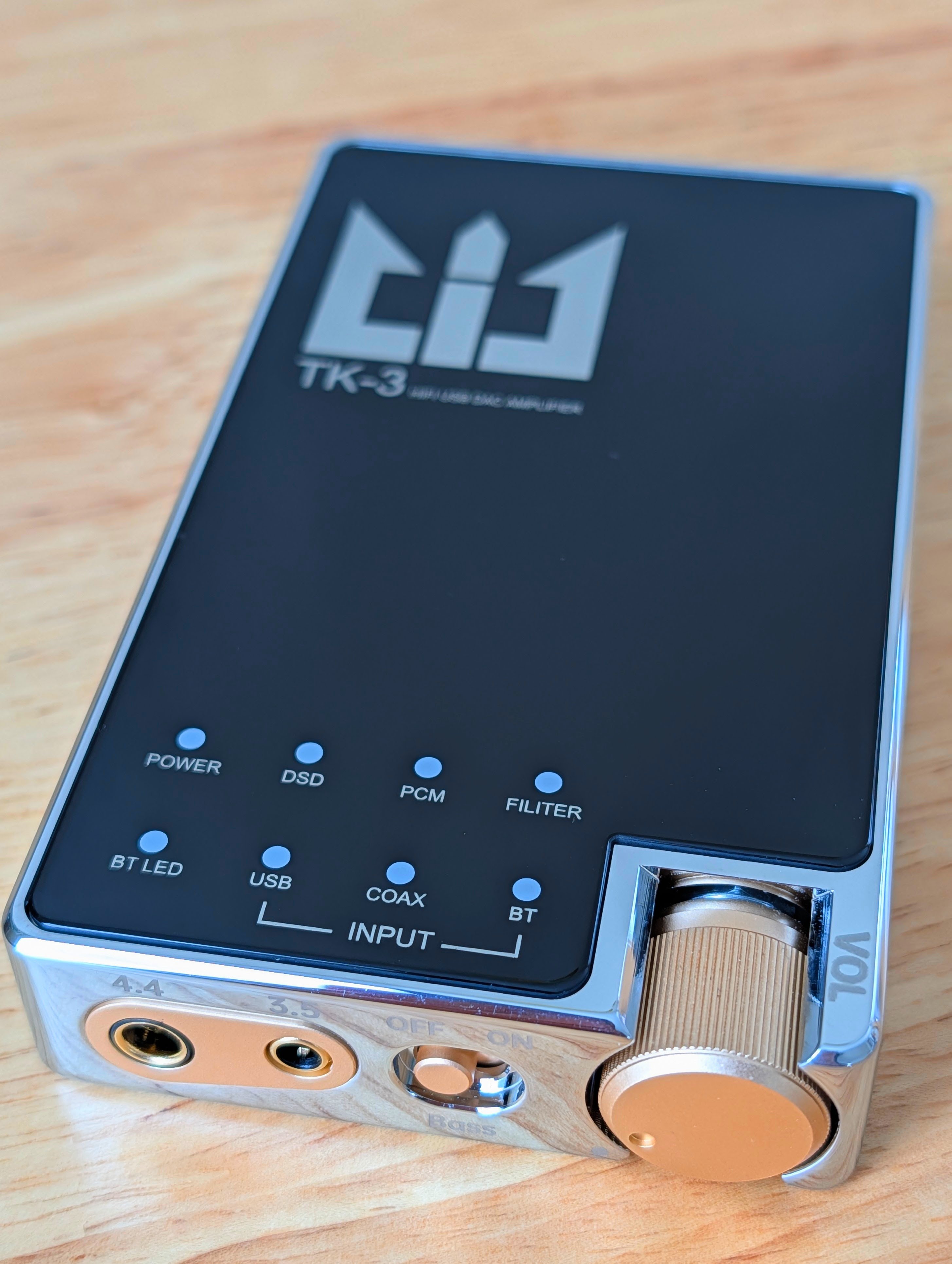
The TK3 can be charged and used simultaneously and there is a circuit protection which cuts off at full charge, so you don’t have to worry about using it as a desktop DAC/amp when you leave it on charge. (I still wouldn’t leave it on charge forever.) Battery capacity is good and allows 6-10 hours power on time, depending on your usage scenario. The device will obviously use a lot more energy in high gain on balanced 4.4mm output with DSD and full sized headphones than with casual Spotify streaming on 3.5mm single ended output and efficient IEMs.
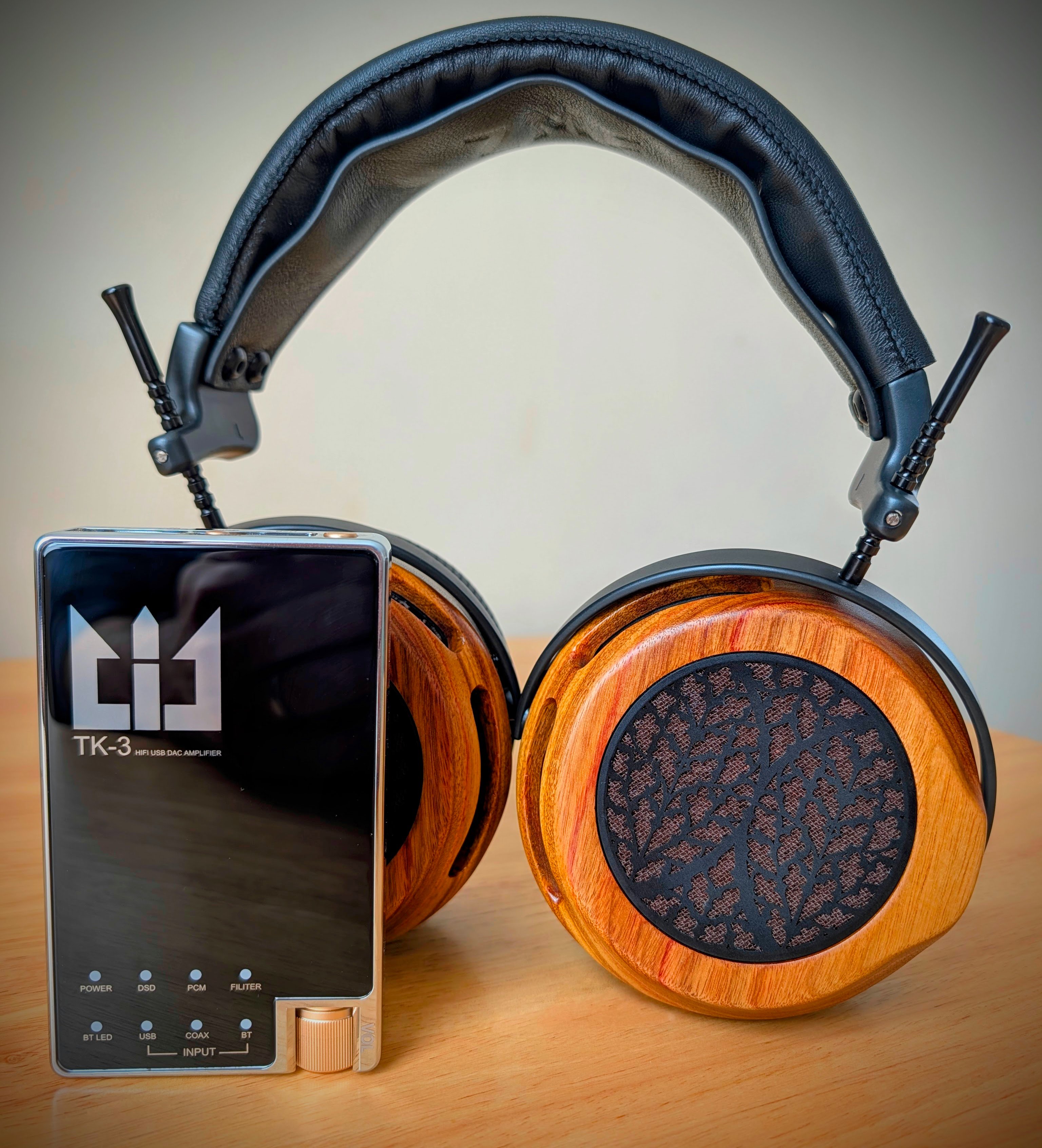
The TK3 is powerful enough to drive many full size headphones. Since I am not really an IEM user, I mostly tested the TK3 with full sized headphones like the new ZMF Tessidera. I briefly used some IEMs lying around like the Meze Alba and the previously reviewed Tri IEMs.
I found that the TK3 can comfortably drive the ZMF planar headphones, but it was struggling a little bit with the 300 ohm Atrium. Of course, the planars also improve on full sized desktop gear, but those have lower impedance (35-60 ohm). For the 300 ohm ZMF Atrium the TK3 couldn’t quite provide the necessary voltage swing which resulted in a thinner, leaner sound than what I normally hear from this dynamic driver flagship headphone. It was still plenty loud enough though.
Build quality, practical use, package
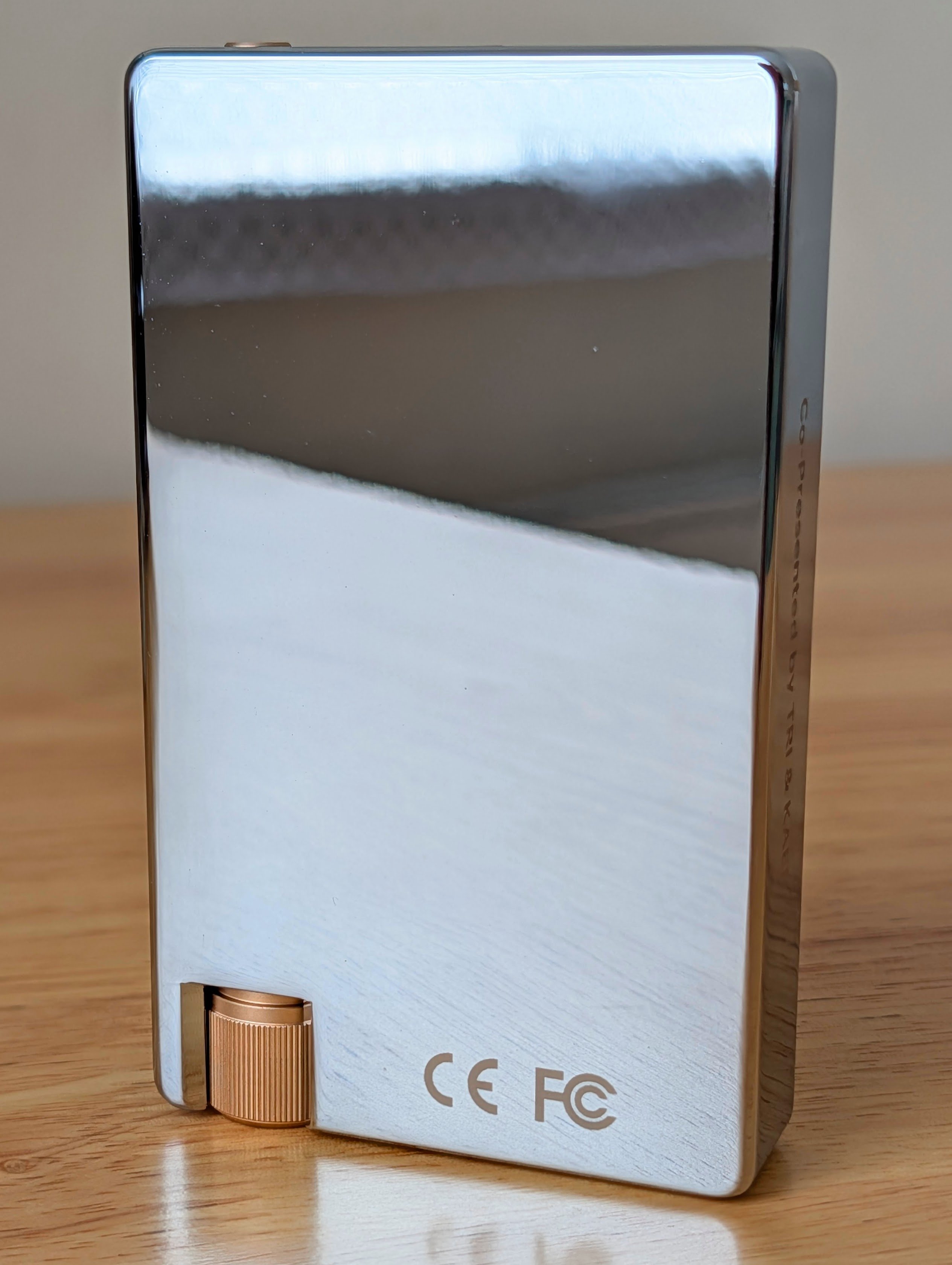
I find the build quality of the TK3 excellent. It is made of aerospace grade aluminium which makes the device sturdy. The size is relatively compact, it fits right under the camera bump of my Pixel 10 Pro, making it a slightly cumbersome, but compact stack with the included silicone bands. Three USB cables are in the box, two short ones to connect to Android or Apple devices and a long one for charging or desktop DAC use. The silicon protective case also feels good quality.
We don’t have a screen and most of the device has a polished, mirror aluminium finish. It literally is a mirror, which adds an extra functionality for female users who need to adjust their lipstick on public transport. Less handy for men, plus it acts as a fingerprint magnet. I am also pretty convinced that it will be full of micro scratches, unless the owner uses the silicon case which beats the whole idea of carrying a mirror with you. 
At 220g the device is not light. It would pull most pockets down, so I can’t really see the TK3 as a portable DAC/amp for daily commute. To me it is more like a transportable travel companion which I would use on holidays in hotel rooms or on a flight. The other usage scenario I see is desktop use. It is a small DAC/amp for desktop, but surprisingly powerful and capable for the price. The charge protection makes it safe for computer use and the sound quality is much higher than a PC/laptop alone.
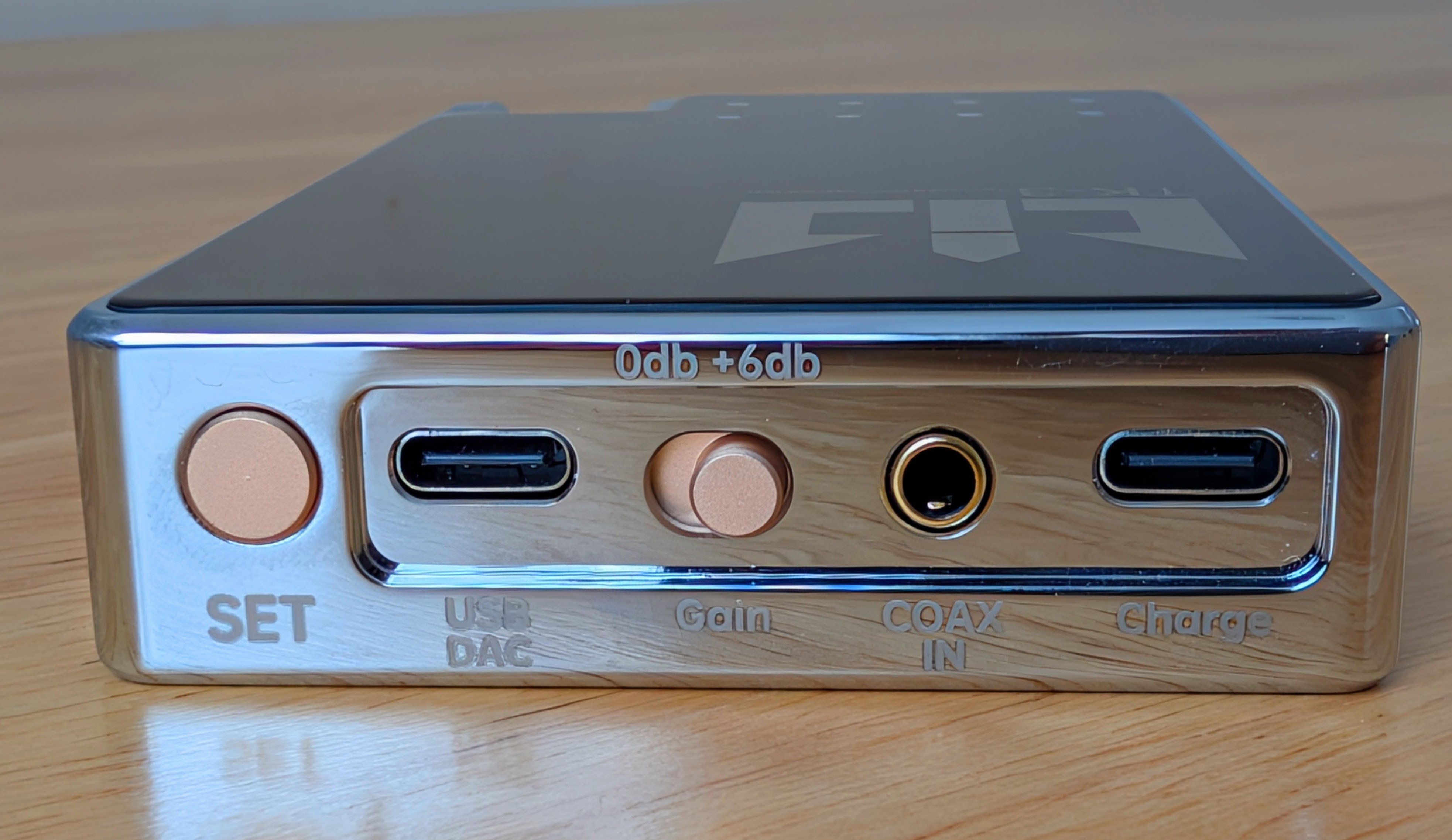
Bass/gain switch
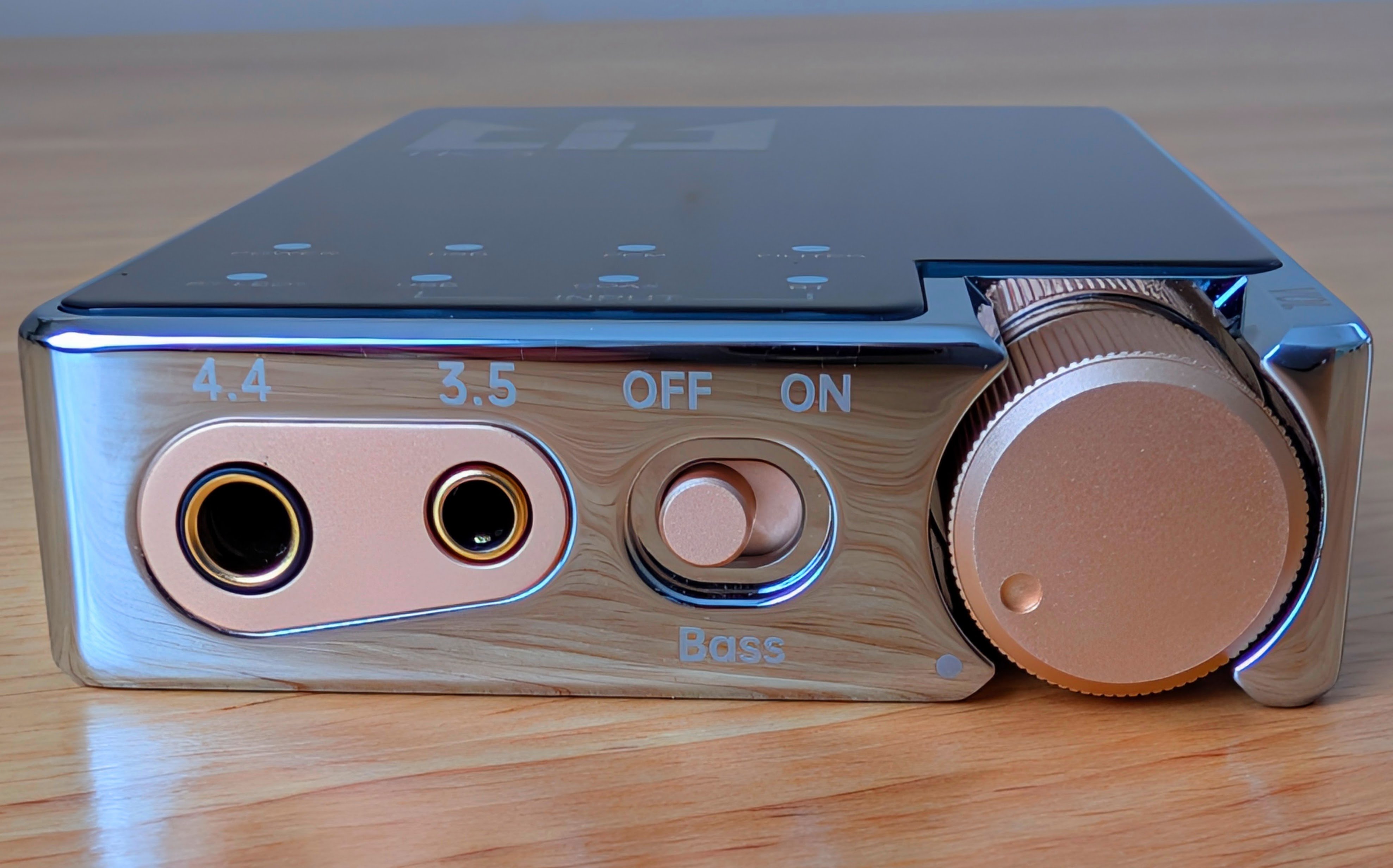
The volume knob feels quality as well. It has a weight to it, it is not flimsy and is well protected yet easy to use. We have two switches on the device, a gain switch and a bass enhancement switch. The gain switch is very useful for different loads, but I wasn’t a fan of the bass switch. In standard mode the TK3 has a well balanced and controlled sound, I didn’t feel the need for more bass. Perhaps some lean or bright sounding IEMs and headphones can benefit from this extra bass, but I think in most cases it is unnecessary. This is also not the most seamless bass enhancement implementation I have come across. iFi devices do this better. Tri’s extra bass implementation works by adding quantity, but the result is not the cleanest. Bass becomes a bit boomy, loose, warmer and less controlled. There is a slight leak into lower mid-frequencies which obscure the transition from upper bass to lower mids. I just left the bass switch alone for the rest of this evaluation.
The ‘set’ button is for changing inputs and filters.
Bluetooth
The TK3 uses Bluetooth 5.4 which is fine for a device like this. This DAC/amp is a Bluetooth receiver only and not a transmitter. Therefore you won’t be able to use it with wireless headphones. The input arrives from your phone or PC to the TK3 and wired IEMs/headphones. I found Bluetooth sound quality surprisingly good. USB connection is still superior; cleaner, clearer, fuller, more impactful and more precise but the wireless performance wasn’t as far behind as I was expecting. I mostly used LDAC from my phone in UAPP, which bypasses Android’s default sound decoding.
The TK3’s Bluetooth input is not multipoint, it can only connect to one device at a time. In my opinion multipoint connection would be beneficial. At home, it would be much easier to switch between PC, phone, streamer or tablet which I did sometimes. Disconnecting and reconnecting to different input devices is also not always seamless and a few times I had to pair the TK3 again to the same inputs. Multipoint connection worked so flawlessly with the little Sennheiser BTD700 USB dongle and B&W PX8 S2 headphones, that the TK3 felt like an old generation device in comparison. That said, the sound quality through Bluetooth was certainly on a higher level versus the BTD700.
I mostly used the TK3 via USB as the sound improvement is still noticeable versus wireless, but it is good to have a quality wireless option for traveling.
Led lights
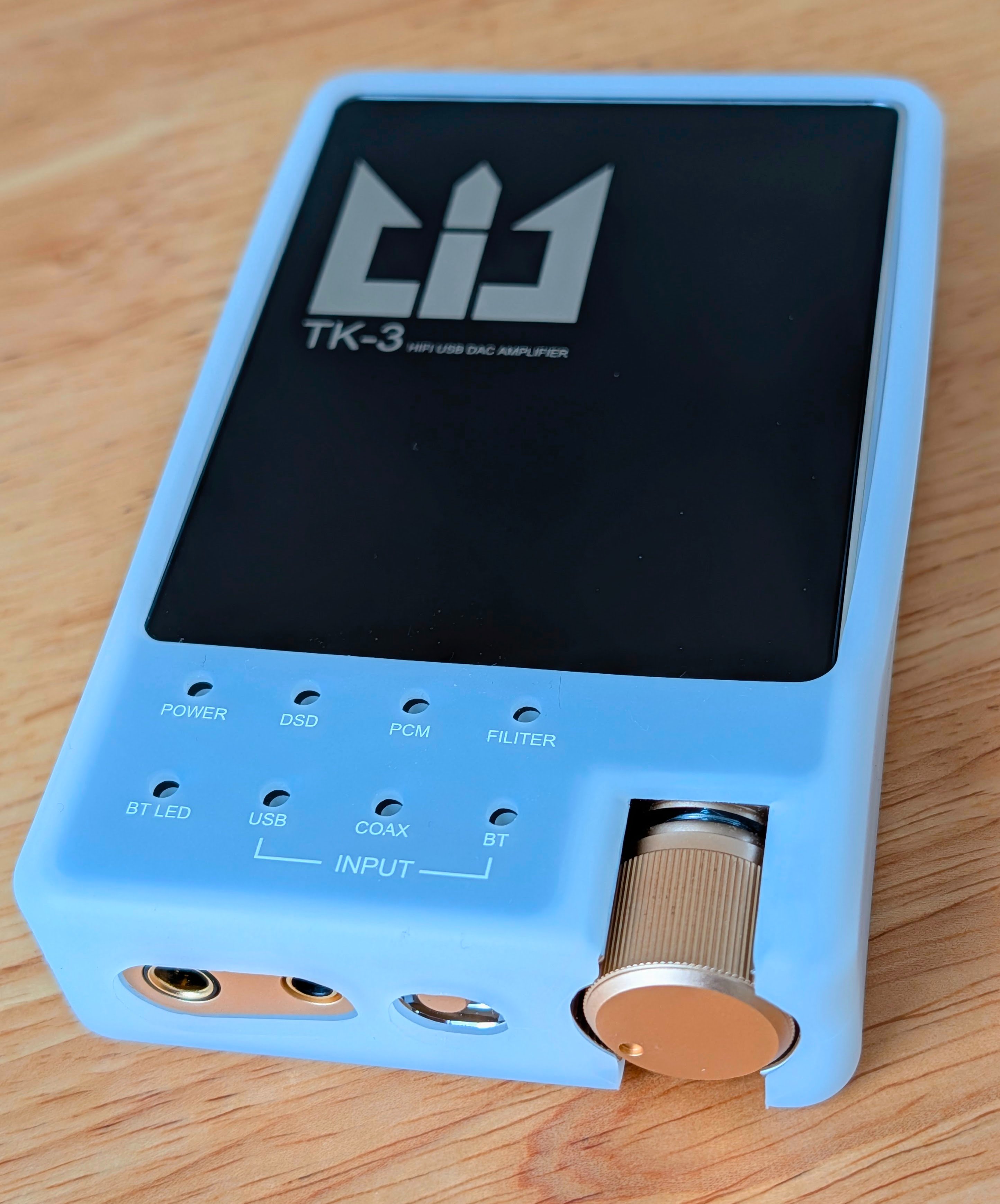
We have not less than eight colourful led lights on the TK3. One for power, then for DSD, PCM, filter indicator, Bluetooth, USB, Coax inputs and a last one for Bluetooth status indicator. In all honesty, I find this excessive and unnecessary. The power led is blinking every 6-7 seconds to indicate battery level with different colours. PCM (or DSD) is always on, we have seven different colours for eight different filters plus another input source indicator led. The leds are quite bright and there is no option to dim them or switch them off. The power led blinking is annoying and unnecessary. This led could be off and activated with a button or we could have a tiny battery indicator screen instead. We also don’t need two Bluetooth related leds. To me this led light show is completely unnecessary and can only be avoided on my desktop by flipping the device upside down. Or sliding a tiny paper in the silicon case, as KeepHiFi suggested to me as a solution, when I indicated this issue.

Filters
The TK3 offers eight digital filters. The difference they introduce is subtle, but present and the effect is mostly noticeable for longer term listening when warmer filters make the treble smoother or brighter filters introduce more sharpness. In default mode the TK3 has a neutral/balanced, slightly warm leaning sound but the treble can have a slight digital edge which certain filters nicely round off.
1, Default, minimum phase filter (no led): this sounds quite clean and neutral. A good allrounder.
2, Linear phase, fast roll off (red): a little sharper and more precise. Slightly more ‘analytical’ or ‘digital’.
3, Linear phase, fast roll off (green): same, but tuned slightly differently. Little better texture than on red.
4, Linear phase, fast roll off, low ripple (blue): smooth yet clean, there is less digital edge than on previous filters.
5, Linear phase, slow roll off (yellow): softer top end, more relaxed but less clean.
6, Minimum phase, fast roll off (pink): even softer.
7, Minimum phase, slow roll off (light blue): smoother, warmer. Not quite as clean and precise.
8, Minimum phase, fast decay (white): fast, tight, detailed. A bit bright.
Here is a small glossary of these terms, but I won’t dive into this deeper as the perceived differences here are indeed rather subtle.
Phase (minimum vs linear)
– Minimum phase: No pre-ringing, but introduces slight timing/phase shifts across frequencies.
– Linear phase: Preserves timing/phase relationships perfectly, but can introduce pre-ringing.
Roll-off (fast vs slow)
– Fast roll-off: Sharp cutoff near the Nyquist limit, better frequency accuracy but more ringing.
– Slow roll-off: Gentler cutoff, less ringing but slightly reduced high-frequency precision.
Decay
How quickly a sound (especially transients) fades out after the initial hit—affects perceived naturalness and space.
Ripple
Small amplitude variations in the frequency response (passband or stopband), which can subtly color the sound.
Price
The Tri TK3 retails for $399 (£300) on KeepHiFi’s website, but on Amazon UK the price is £399 ($530). At this price I immediately thought of the Chord Mojo 2, which retails for £395 in the UK. (The Mojo 2 would be $650 in the USA.) Since I am in the UK, I have to look at the local prices, which makes these two devices direct competitors. Sound quality on the smallest portable Chord device is still a step above. Where the TK3 wins, is functionality, especially when it comes to wireless use. The Mojo doesn’t have a wireless module, unless you add the Poly which almost doubles the price. Based on pure sound quality Mojo 2 is the industry standard at £395 and while the TK3 is a very good sounding device, the Mojo simply performs better by offering a more natural and effortless sound.
At £300, when purchased directly from KeepHiFi and not paying extra import taxes, the TK3 is actually a good deal. With some promotion discounts or second-hand purchase. when the prices drop below £300 (£200-£250) the TK3 becomes quite a bargain. At £400 however, I think it is not quite competitive in the UK.
Sound
In general, I was quite surprised how good the TK3 sounds. Overall it has a very well balanced sound signature which can be fine tuned with the filters. There is no sign of harshness or brightness of the ESS chips, only when using some of the brightest filters. Implementation matters a lot more than the DAC chip. My favourite filter was the blue one, which offered a good balance in clarity/technicalities and a more rounded timbre, more pleasant tone. The brighter filters can sound too bright and digital, the warmer filters lose too much of clarity. Blue (or yellow) was a great middle ground.
Using my ideal filters, I would describe the sound as relatively neutral, well-balanced, leaning into a pleasant warmth and roundedness. Thanks to the femtoclock, the timing is excellent and the background is nice and dark. This translates to an overall clean and clear sounding device, but not sterile or artificial, thanks to the good tonal tuning.
While the TK3 might not reach the effortless naturalness of the Chord Mojo 2, in many ways it sounds a level above the usual (still excellent) little dongles like the Questyle M15i or Cayin RU6. Compared to the dongles, the TK3 sounds much fuller, bigger, more substantial and a lot more powerful which contributes to extra headroom. The natural finesse of the Mojo 2 is clearly audible, but with the TK3 you are still getting very good sound and more functions like a built-in, high-quality wireless module.
For KeepHiFi’s asking price ($400/£300) the TK3 offers adequate technicalities. The sound is balanced, detailed, timing is excellent and tone/timbre nicely tuned.
Bass is present, well extended, quite clean and precise while has a good body and impact. It is not overblown and doesn’t bleed into the mids, as long as you leave that bass switch alone.
Mids are nicely balanced; for a portable digital device with ESS chips they sound quite nice, rounded and pleasant.
Treble is smooth with the correct filters, there is no bothering brightness or sharpness at all.
For KeepHiFi’s own retail price we are getting a natural sounding, neutrally balanced device which sounds rounded as opposed to sharp with a slight warmth. I wasn’t as happy with the tuning of the Tri I3 MK3 and Kbear Cepheus IEMs as I am with the TK3’s tuning approach and natural balance.

Conclusion
The TK3 sounds better than I expected and it is a device that I will probably use for some holidays and/or on my desktop. For daily portability in the pocket it is a bit on the heavy side, but I find it useful and handy next to my computer, when I quickly want to switch from my main tube amplifier (not connected to PC) with the same headphones to YouTube or watch a film. It is powerful enough to drive most full sized headphones under 100 ohm impedance and sounds more than decent and accurate for the Chinese (non UK) asking price. I wish it had Bluetooth multipoint and the led lights were less excessive, but these won’t be deal breakers for most customers.
If the price was £300 (or less) in the UK, it could be quite a competitive, although still niche product. Build quality and overall sound quality surprised me in a positive way, but competition is tough on this market and there are other strong choices below £500 like the Chord Mojo 2. All in all, I think the TK3 is still a solid device that KeepHiFi can be proud of.