Pros: – natural and organic sound
– warm, engaging tonality
– unique, boutique look
– lifetime driver warranty to original owner
– relatively affordable for what it offers
Cons: – frustrating pad-swap system
– shallower earcups
– stronger clamping force out of the box
Disclaimer, intro
Zach Mehrbach, the founder and CEO of ZMF kindly lent me a pair of Bokeh for a few months in exchange for my honest thoughts. After reviewing and purchasing the Caldera open last year, and reviewing the Caldera closed this year, I was interested in what the ‘entry level’ ZMF closed-back has to offer, how it compares to other headphones around $1000 and what are the compromises versus higher-end ZMF models. Let us find out together.

Build, accessories, comfort
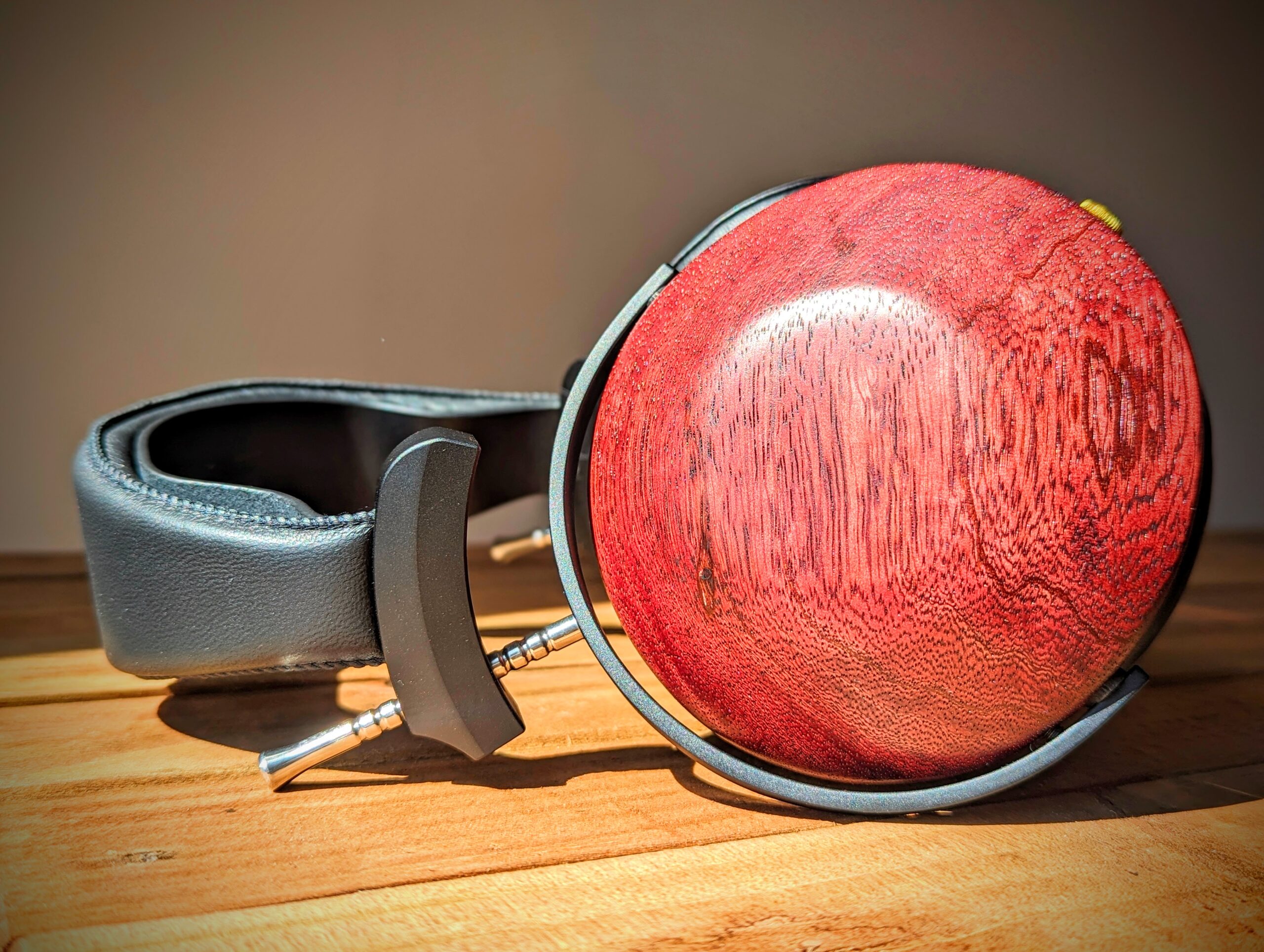
It seems to me that the ZMF team had a mission with the Bokeh: bringing the signature, warm and organic ZMF sound to financially affordable levels as much as possible, while not cutting too many corners. In my opinion they have succeeded: some small corners were cut at the right places, and they managed to convey the essence of what ZMF is about in a relatively affordable package. You get a neat cardboard box instead of a seahorse or wooden case, a slightly thinner and simpler headband, but the Bokeh is still a beautifully crafted wooden-cup headphone that feels unique, boutique and special.
The pair I have got with me weighs 507g, which in my opinion is very good considering the large closed wooden cups. The Bokeh feels light and comfortable on the head. The connectors are 3.5mm instead of the usual mini-xlr on other ZMF headphones; the headband is a little thinner, but still has just enough padding with a nice, quality leather strap. The general build feels a little simpler in direct comparison to the Caldera, but definitely not by the extent the price difference would suggest. For the price you get a unique-looking, beautiful wooden-cup headphone that stands out on the market in its style and you can immediately tell it is a ZMF.
As all ZMF headphones, the Bokeh also comes with different earpads and meshes, allowing the user to fine-tune its sound to their liking. ZMF offers a bundle deal on their tuning kit, in case the buyer would like to experiment with all tuning options beyond the stock configuration. A beautiful and quality carrying case is also available, for an affordable $60.

I have one minor gripe regarding comfort, and that is due to the shallower earpads: even my relatively small ears slightly touch the felt inside the cups. It is not as bothersome as it can be on other headphones, but this is the first time I experience this on a ZMF. After a few minutes I get used to the sensation, but it is not something I like. Out of the box, clamping force was also a bit on the stronger side, but this can easily be adjusted by a gentle stretch on the headband.
I cannot not mention the pad swapping experience. Due to the oval shape of the earcups, I find pad swapping a lot more challenging than on the round shaped ZMF headphones. Having so many tuning options and earpads is fantastic, but at the same time the oval shaped Bokeh cups sometimes tested my patience. I can swap both pads on the Caldera in under a minute, while on the Bokeh sometimes I still struggle for 3-4 minutes. A different technique is needed with the Bokeh which many owners will initially find frustrating, but I am sure, skills will naturally improve by time and practice.
Sound
I am not going into the general differences between open and closed headphones, I explained my preferences in detail in my recent Caldera closed review. In a nutshell, I generally dislike closed backs and vastly prefer open backs, but I think ZMF makes the best and most natural sounding closed backs today, due to their patented ADS airflow system. If I needed closed backs, ZMF would be my first point of call. Other closed backs to me sound boxy or hollow or simply unnatural. The Bokeh is free of these disturbing qualities and sounds very natural, also a lot more spacious than you would expect.
In my opinion, Zach and the ZMF team managed to capture the essence of ZMF with the Bokeh: a lush, organic, natural sounding, warm and fun, engaging tuning. The Bokeh and most ZMF headphones are not for those listeners who like to analyse sound and hunt for the tiniest background details. These headphones are for those who prefer to get lost in the music and enjoy listening for hours. The Bokeh’s tuning is not flat and not analytical. There is a bit of a mid-bass emphasis which gives a strong foundation to the sound and contributes to the thick, natural texture. This emphasis is tastefully done and never feels overbearing.

The Bokeh blends in nicely with its big brothers.
Bass is plentiful and super fun. Not as dynamic as something like the Denon D9200, but thicker, lusher and more natural. Not as precise as something like the LCD-X or Focal Clear, but feels more alive, more organic. I am not really missing anything from the bass with EDM, and equally do not feel it is too much with orchestral music. This level and quality of bass simply fits into the Bokeh’s general character very well.
Mids are magical on ZMF headphones, and the Bokeh is not an exception. In my opinion, this is where the Bokeh stands out from the competition as the midrange just sounds a lot more lifelike, more organic, sweeter and more engaging than anything else I tried around $1000. The D9200 sounds a bit boxy in comparison, the HiFiMan Audivina too hollow, LCD-X a bit plasticky and Focal Clear a little thin. In my experience no other headphones can convey the texture and timbre of vocals as well as these wooden beauties from ZMF.
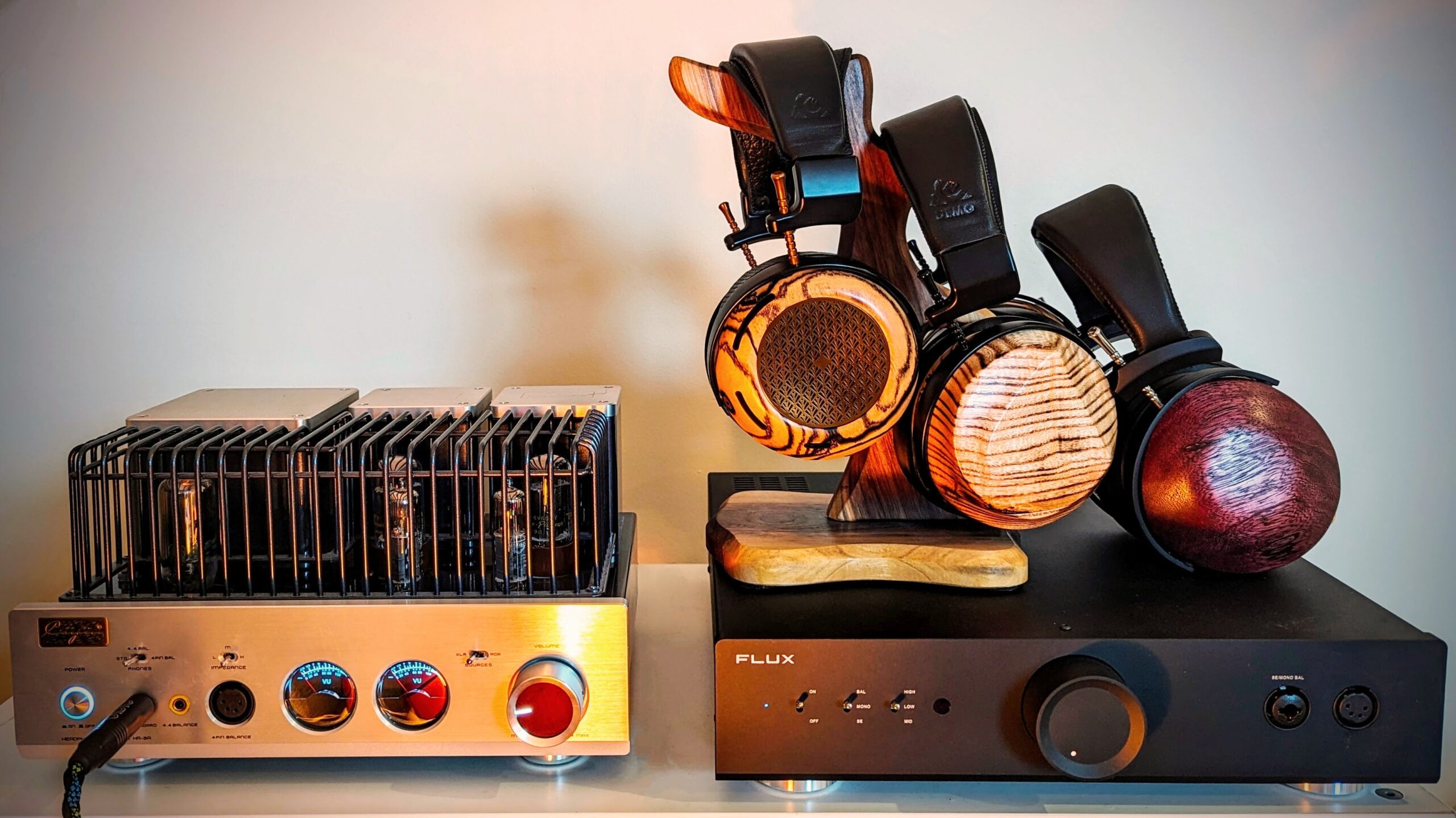
Bokeh sounds nice both on tubes and solid-state amplifiers, but the midrange really comes alive on tubes. Also, while the Bokeh does scale with better gear, it reaches its limits relatively soon and won’t be able to show what resolution and detail retrieval these amplifiers in this picture are capable of. For that, you will need higher-end headphones, like the Caldera. It is all about system balance: the Bokeh will already shine on more affordable amplifiers.
Apologies for using the words ‘natural’ and ‘organic’ so often, but that is simply the best way to describe the Bokeh (and ZMF sound in general). I have recently asked Zach in a mini-interview, how he manages to achieve such a sound. He says, it is mostly down to transient impulse, dynamic nature and timbral characteristics.
This natural theme continues in the treble: percussion, cymbals and other similar instruments sound lifelike and not metallic or piercing at all. I consider the treble good, although if you are a ‘treble-head’, these headphones might not be for you. While the Bokeh sounds airy for a closed back, the spatial limitations compared to open-back headphones become most obvious in the treble region. It is also a warmer and slightly darker treble, definitely not something you hear on the Focal Clear for example. If you want treble detail, more brightness and a bit of a ‘zing’ to your treble, you are better off looking at Focal’s or HiFiMan’s offerings. On the other hand, if those headphones are too bright or piercing for you, you will love the Bokeh’s warm naturalness.
I find the overall technicalities of the Bokeh adequate for its price range. Perhaps it is not the last word in detail retrieval, but they offer enough details for the listener not to feel like they were missing out on anything. Something like the Arya Organic for example will be more detailed, but those headphones are open-back and follow a different tuning philosophy. When I look at closed-back headphones around $1000, I simply cannot see a more appealing alternative to the Bokeh. This is the most natural, organic and engaging sound in a closed cup design I have heard under $1500.

The Bokeh is said to be ‘portable’. While something like the Questyle M15i can indeed drive them nicely; due to the size and wood finish I would rather consider them to be ‘transportable’.
I would much rather take the Bokeh with me to a hotel room than the Caldera, but still wouldn’t use them on public transport.
Compared to higher-end ZMF headphones like the Atrium or Caldera, the Bokeh gives the listener the signature ZMF sound, but of course the big brothers will offer more: larger soundstage, finer balance, more details, higher resolution, better layering and so on. On the flipside, you will also have to open your wallet much wider. The Bokeh is an excellent ZMF ‘taster’, a gateway drug into Zach’s magical world.
Tuning options
Some ZMF headphones come with five or even more earpad options and two meshes that affect frontal dampening. With the Caldera closed for instance I spent quite some time discovering my favourite combination. This Bokeh ‘only’ came with three earpad options and one extra mesh. Finding my preferred combination with the Bokeh was a lot quicker and also my preference was immediately obvious. On other ZMF headphones I usually have an option ‘B’ earpad which I still enjoy, but on the Bokeh, there is only one setup that I vastly prefer to the alternatives.
The three earpads are suede, leather and hybrid. The hybrid has leather outside and suede inside and this is the stock pad. There is also an optional, more dense mesh which you can swap with four screws: a little more cumbersome method than the Velcro-like mesh-swap system on the Calderas.

80-ohm LCP (Liquid Crystal Polymer) driver exposed. This is what you see when you remove the mesh.
I clearly prefer the hybrid pads on the Bokeh with the stock mesh. To me the hybrids provide the best balance between airiness/naturalness and bass dynamics/impact. The suede pads sound a lot softer, upper-mids and treble are the most open and natural on them, but they suffer from a loss of bass focus and energy. The leather pads further increase bass impact and energies, but the upper-mids and treble become too closed-in and a bit suffocating. The hybrids simply offer the best of both worlds: enough bass body and impact with balanced and adequate openness in the higher frequencies.
I also prefer the stock mesh: the full/denser mesh to me darkens and softens the treble too much. Without any mesh the Bokeh falls a bit out of balance.
Stock configuration is the clear winner for me.

Conclusion
So, who is this headphone for? In my opinion these are for enthusiasts who need a closed-back around $1000 and love a natural, organic, engaging sound. I would choose the Bokeh over any Fostex or Denon variants due to the qualities I have described. I would also pick the Bokeh over some open-back headphones in this price category, which says a lot, considering my general aversion to closed-back sound.
This headphone is not for the detail hunter, but it is detailed enough for the price. It is not for those who chase ultimate balance and supreme neutrality, but for those who appreciate a natural presentation, like a bit of warmth and value a slightly coloured but supremely enjoyable tuning over a neutrally balanced microscope.
The open version of the Bokeh is just around the corner and I can’t wait to hear what Zach has cooked for us this time. My feeling, based on the Bokeh’s tuning, is that the open version could be an even bigger hit.
The Bokeh closed is a supremely joyful listen in a relatively affordable package which I can highly recommend to those who recognised their preference based on this write-up. Thank you, Zach!