Pros: – exceptional refinement
– natural smoothness
– large stage with excellent layering
– grounded and weighty but effortless presentation
– lifelike, nuanced texture & timbre
– drives any headphones and even speakers
Cons: – heavy & large (expected)
– only 41 relay volume steps; could use twice as many
Intro
Thanks to Zach from ZMF and John from Cayin, I had the opportunity to spend a few weeks with the new Cayin HA300 MK3 in my home with my own gear. I heard this amplifier briefly at London CanJam, but it was at the end of a long day and its initially polite sound didn’t capture my fatigued ears. My home audition also started like this; I found the HA300 MK3 a bit polite and neutral. However, it only took me a couple of hours to fully get used to its sound and start to really appreciate what this amplifier offers: a highly refined and supremely natural tube sound.
Background
I have been a happy owner of the ZMF Aegis for two years and have rolled an extensive amount of NOS tubes during this period, using the impressively long compatibility sheet for the versatile Aegis. In 2024 I upgraded to the Aegis from the Cayin HA-3A, which had been my first ‘better’ tube amp and my tube-rolling learning ground. I compared the HA-3A to the Aegis in 2024, and now I will compare the Aegis to the new challenger: the latest iteration of the famous HA300.
USA/UK/EU pricing
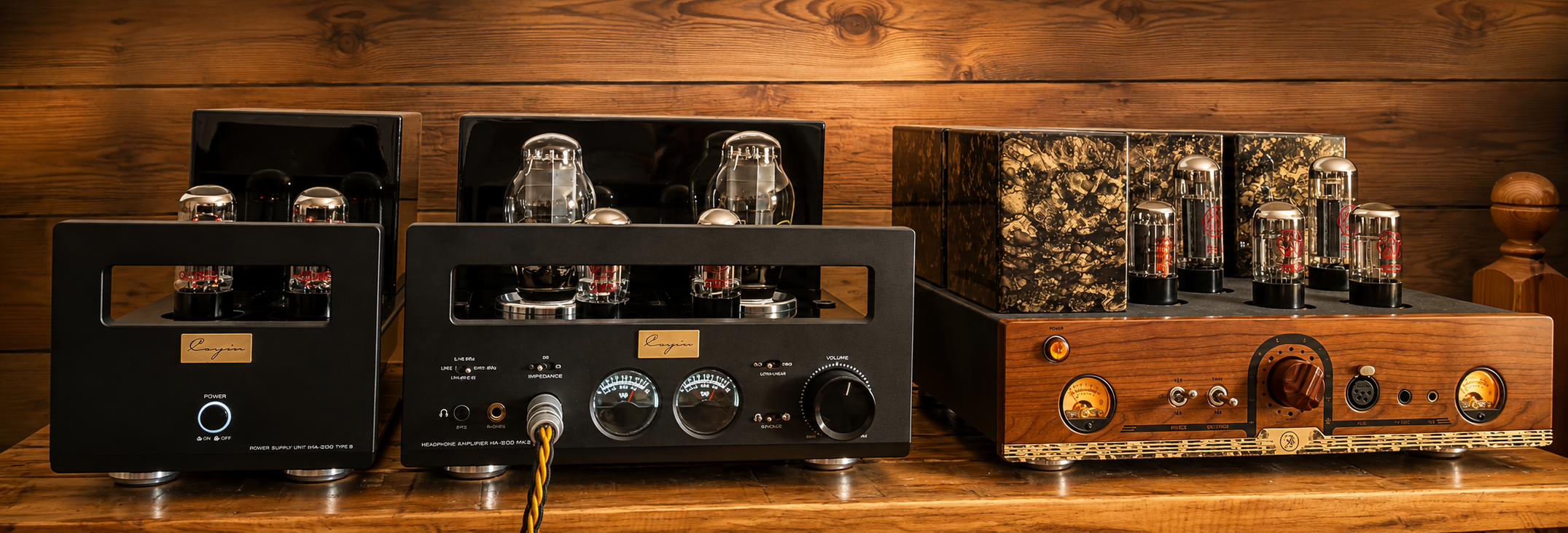
In the UK, the HA300 MK3 sells at £3,300 while the Aegis is listed at £3,400. In the USA, the Cayin amp sells at $4,400 (£3,300) and the Aegis is listed at $3,500 (£2,600). The EU price of the Cayin is €5,480 (£4,700), while the Aegis is €4,400 (£3,770). As you can see, global pricing is all around the place. In the UK and EU, prices must include at least 20% VAT, so that explains the higher prices of the Aegis, but doesn’t explain the large EU price hike of the HA300 versus the UK market.
In the UK, where I live, these amps are direct competitors when it comes to RRP. In the USA, the Aegis is significantly more affordable, while in the EU both amps become pricey, with the HA300 priced 25% higher than the already expensive Aegis. Since I am writing the review in the UK, where the prices are pretty much equal, I will treat the two amps as direct competitors.
Gear
Of course, I compared the two amps with stock tubes, but then mostly used my favourite tube combination in the Aegis: GEC KT88 top getter (1959), Mullard ECC35 slim base (1952) and Mullard FW4/500 triple mica/striped plate (late 1940s). I also used the same Mullard rectifiers in the Cayin amp and swapped the stock input tubes for a quad of Mullard VR135/CV6 following @Wes S‘s recommendation. He found these to be some of the best input tubes for the HA300 MK2 when he owned that amp. (Thanks @Wes S! ) Due to the price of 300B tubes, I will only swap those if I buy the HA300 MK3. You can follow that journey in the HA300 MK3 thread if it happens.
I used my Holo Cyan 2 DAC and my brand new Audio GD R8HE MK3, both with balanced connections to the Cayin and with a little Jensen transformer box in case of the Aegis. This box allows me to use the higher-quality balanced outputs of the DACs and transform the signal in the cleanest possible way into the Aegis’s SE-only inputs. To my ears, this improved the clarity of the Aegis. (Warning: the Jensen box cannot be used with high-output-impedance DACs like Denafrips or Musician, but it is fine with low-output-impedance DACs like Holo, Audio GD or Gustard.)
My source was high-res streaming from the EverSolo T8.
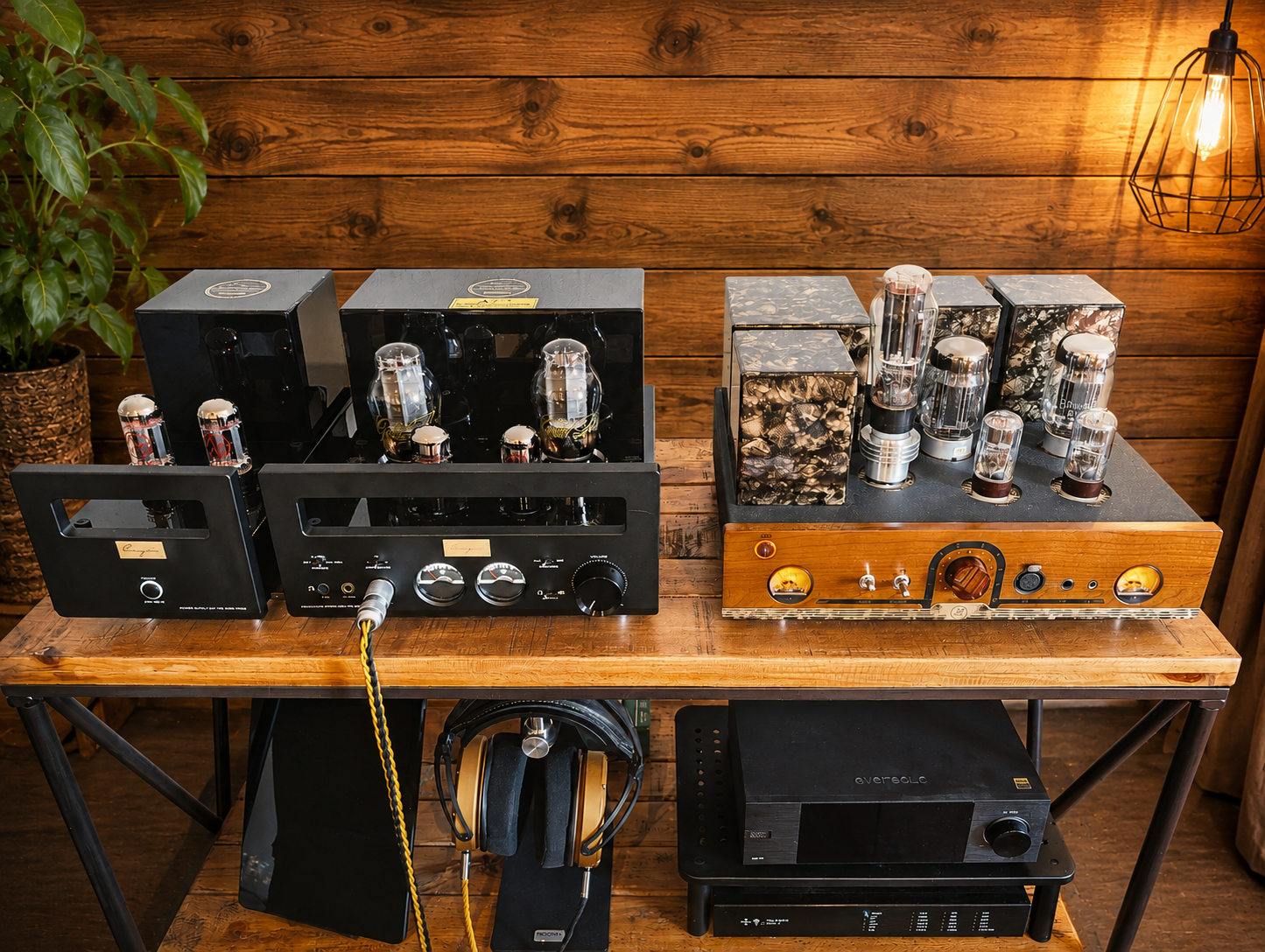
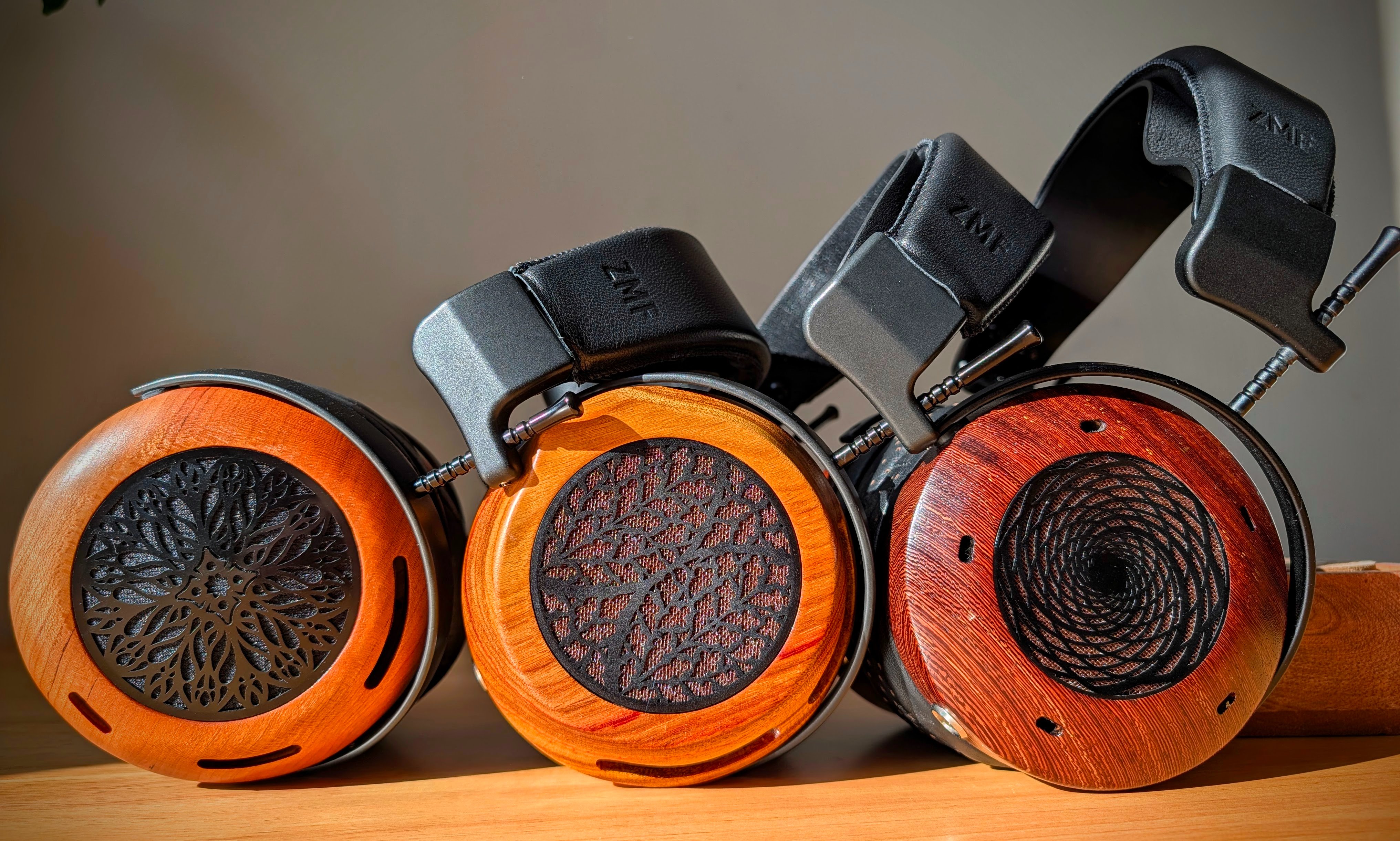
I conducted the test with my main headphones, the Bandoss Avija and the ZMF Tessidera, and also briefly tried the Aune AR9000, Susvara Unveiled, and ZMF Atrium and Verité. Since the SE headphone output on this amplifier is almost as powerful as the XLR output (6W vs. 6.5W), the difference between the two was surprisingly small. The harder-to-drive Susvara and Avija seemed to benefit slightly from the extra power of the XLR output, with a touch more grip and control, while the other headphones sounded a hint more pleasant through SE. In practice, however, these differences were extremely subtle and could easily fall within the realm of psychoacoustics. On many amplifiers, XLR outputs can deliver twice the power of SE, resulting in a much more noticeable difference, but that is simply not the case here.
An important note: this Cayin amp is a true SET amp, so the XLR input/output is not a sign of true balanced topology; it is just there for convenience. There is a lot of misunderstanding in the hobby regarding the advantages and disadvantages of balanced and single-ended circuitry, but it would take a whole chapter to go into that. The bottom line is that SET tube amps don’t need to be fully balanced, and balanced is not always superior to single-ended.
I am a headphone listener, so I haven’t tested the HA300 on speakers, but it can drive 4–8 ohm speakers, which is a major advantage for many customers.

What is new in the MK3?
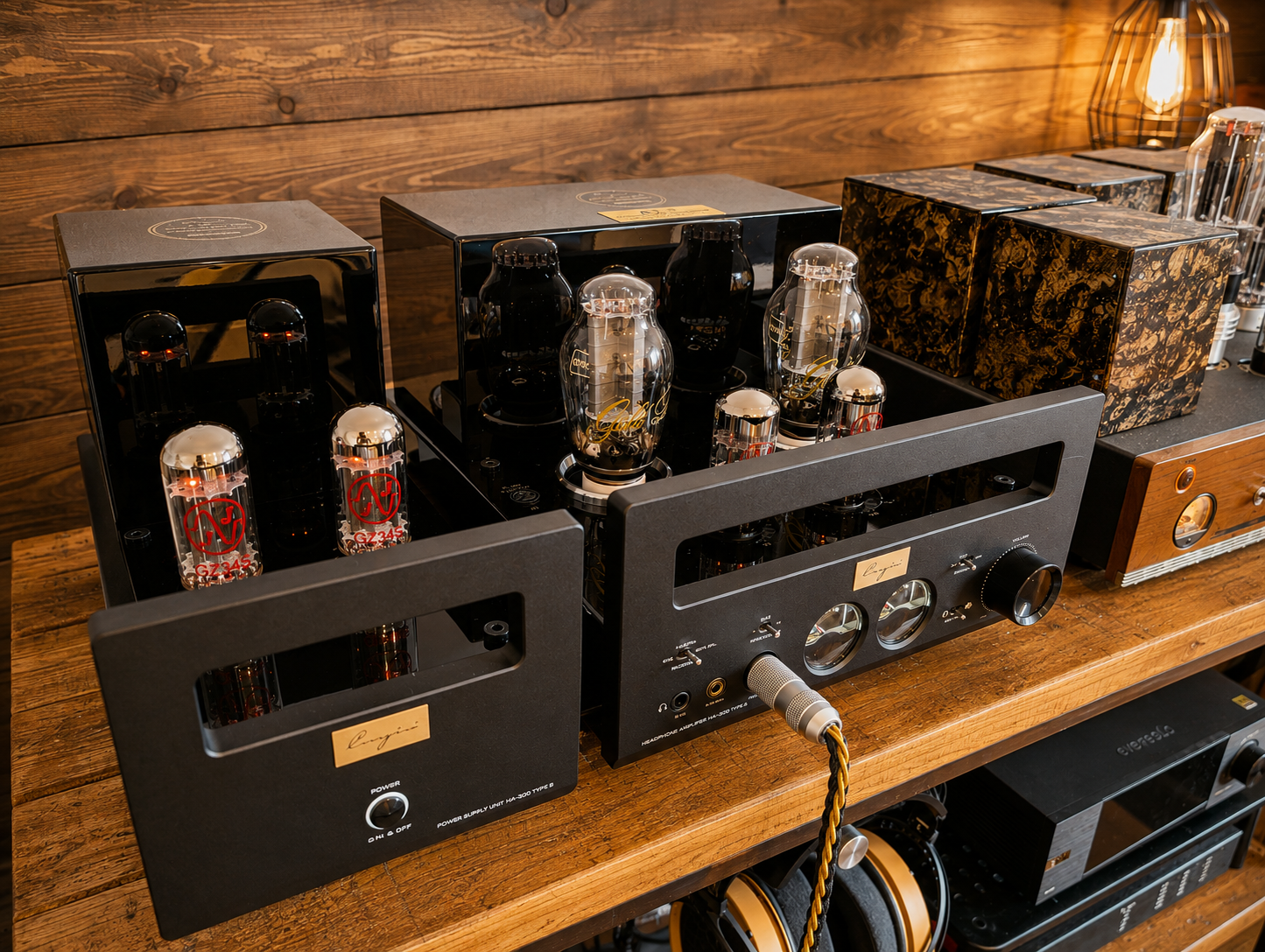
Unfortunately, I never heard the legendary HA300 MK2, but there seems to be a strong consensus out there that the MK3 is indeed a solid upgrade over it. Cayin has updated the circuitry, swapped some components for better ones, and improved the craftsmanship and design. One of the biggest upgrades is the use of a pair of GZ34 rectifier tubes instead of the rather unusual and random 22DE4 quad. They don’t just sound better; they are also easier to find. And you only need a pair, not a quad. (Still twice as many as the single rectifier in the Aegis, which can become pricey in case of some exotic rectifiers like the metal base Philips GZ34.)
The MK3 is slightly more powerful than the MK2, driving a fairly consistent load of 6W from the SE output and 6.5W from the XLR output. The 4.4mm output has been attenuated for IEMs, with 1.6W of output power instead of the 4.5W on the previous generation. This makes the MK3 a much better choice for IEM users, offering a noticeably darker background with zero detectable noise floor. (I briefly tested this with my humble Meze Alba.)
The transformers received a major upgrade, and Cayin also swapped the coupling capacitors for high-quality Duelund capacitors from Denmark (Much more expensive and a lot heavier than the previous AudioCapX.) The Chinese manufacturer also improved the aluminium finish with new sand-blasting technology (more premium look & feel) and changed the tube sockets to gold-plated ones.
One big advantage of the HA300 over the Aegis is the completely separate power unit. The more separated the power supply is from the other components, the better. A separate unit is simply the best solution, leading to a lower noise floor. It is not like the Aegis is not quiet; it is. But even champions can improve.
The volume control is a 41-step ALPS attenuator with a high-fidelity volume control chip. In general, it is very nice to use, but I have to say that 41 steps are not quite enough for me. I regularly find myself preferring a half-step of volume between two existing steps, but that isn’t an option. I imagine 90% of owners will be fine with the 41 steps, but I would much prefer it if we had twice as many for finer volume adjustments.
I am not going into details here regarding the Aegis’s unique topology; you can read that in my Aegis review. Let me sum it up by saying that the Aegis is not a regular SET (Single Ended Tube) amp design. It uses a cathode-follower topology and combines elements of OTL (Output Transformerless) and transformer-coupled tube amplifier designs. The signal path is designed to remove coupling capacitors while retaining the advantages of transformer coupling, aiming to combine some of the characteristics of OTL and transformer-coupled tube amps while remaining more versatile than a traditional OTL design. This allows the Aegis to sound unusually full and dynamic for a TC tube amp.
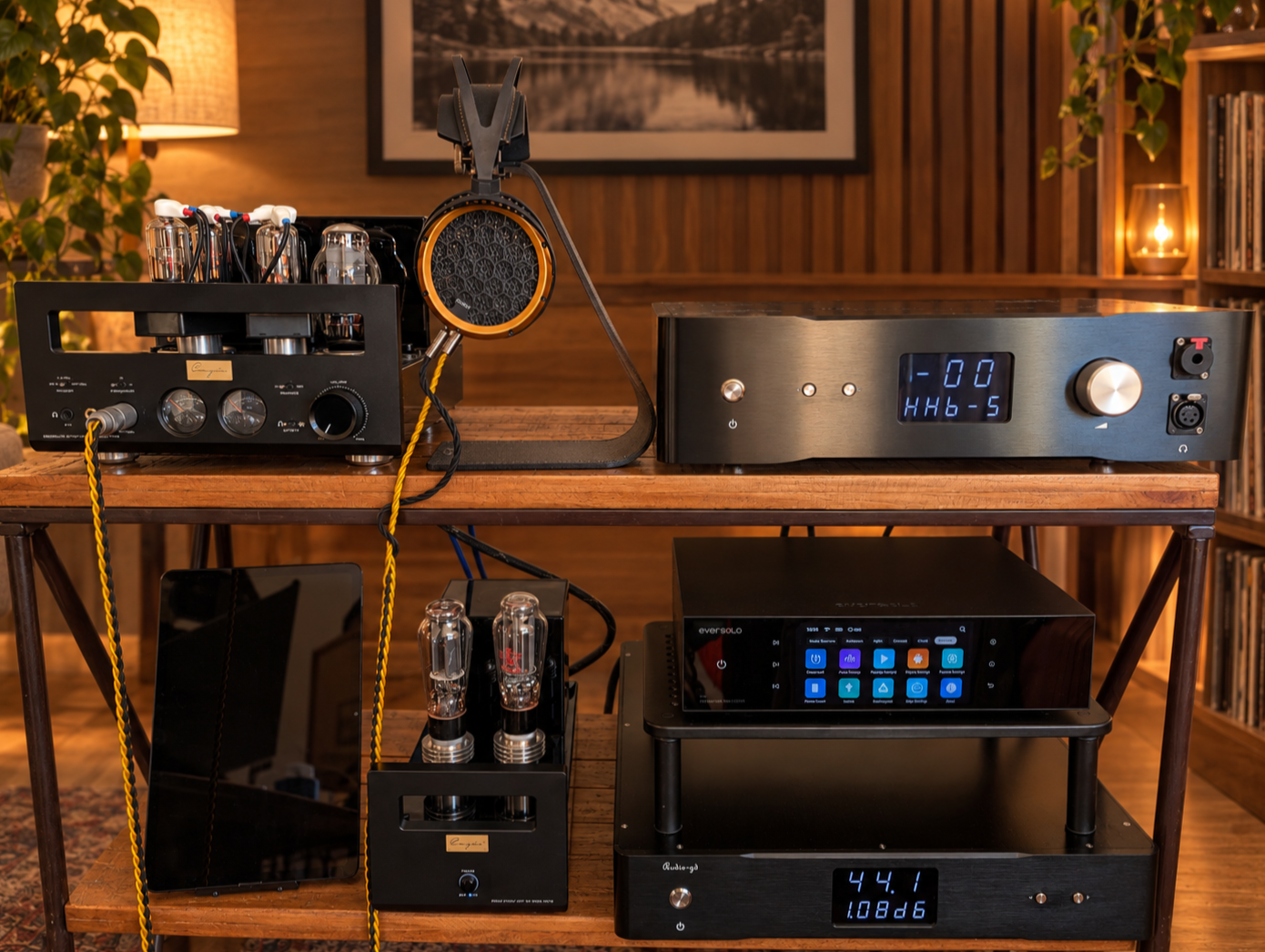
Excuse me, but I changed the white wall background on my photos for something more appealing.
Sound
General
I would sum up the HA300 MK3’s sound as highly refined and detailed, with excellent texture. The presentation is smooth, with great soundstage, layering and detail retrieval. There is a slight warmth to it, but it is not overly warm. It has an elegant balance and an unmatched naturalness that only 300B amps can evoke. The background is pitch black. Despite the smooth, refined and detailed sound, there is nothing lacking. Notes have good weight, energy and almost a physical presence. The texture and timbre of instruments is almost tangible.
I wouldn’t call this tube presentation simply ‘warm’. It is definitely not the warmest tube amp I have heard in its stock form, just slightly warmer than neutral. Instead of warmth, I would say that there is a subtle sweetness that comes from the big 300Bs. It is never bothersome and feels very pleasant to the ears, but this isn’t going to be your ultimate neutral amplifier that simply ‘disappears’ from the chain. The personality of the HA300 is a lot more subtle than I anticipated; it just lingers in the background, and I love it.
Everything in the soundscape is very precisely articulated and placed, with a realistic timbre and sense of presence. Despite the elegant presentation, notes retain excellent weight, which gives the sound a feeling of groundedness that contributes to the perception of lifelikeness. After all, I think at this level of audio gear, the ultimate goal we are chasing is lifelikeness. And the HA300 MK3 is very good at it for the money.
The overall sound appears as a coherent whole; nothing stands out too much, and nothing blends into the background too much. Sweet balance, coherence and lifelike timbre rule the landscape with a hint of tube magic.
Bass is elegant and well balanced, but not shy when it has to come alive. There is a beautiful balance between sub-bass and mid-bass. Neither is overpowering the other, but they are equally present. Bass has a beautiful, natural clarity. Every bass note appears in an effortless manner. Nothing is forced; everything is clearly separated and natural. That said, this bass is not shy when it comes to EDM tracks. Low notes have a very satisfying and natural weight to them. This weight lends a presence to the low end which is utterly pleasing with bass-heavy tracks. It is not the aggressive, slammy kind of bass, but at the same time it never lacks anything. It is present with an elegant authority. Like a gentleman with an Aston Martin V12: refinement and power.
Midrange is outstanding. Vocals and acoustic instruments carry a natural presence. There is plenty of detail to observe on the micro level: the subtleties of piano notes, the harmonics of a violin string, or the subtle layers you hear on a beautiful female vocal. They are all there, but this clarity doesn’t take away from the feeling of lifelikeness. It is a clean, natural and engaging presentation. Midrange is neither forced nor recessed. Both spatially and tonally, it is in perfect balance with the bass and treble. In fact, it feels strange to separate these sections, as they truly form a coherent whole.
Treble is clean, clear, detailed and natural. There is not even a hint of brightness or edginess. Everything is highly detailed and well extended, but also has very refined edges. I don’t want to use the word ‘smooth’ because that could imply a lack of clarity. This treble is not simply smooth; it is refined, effortless and lifelike, with plenty of air. Hi-hats, for instance, never hurt the ears; they just give off the natural reverberations and decay one would expect from this instrument.
Tube rolling
My philosophy is that with a tube amp, you buy a platform. The circuitry gives maybe 80% of the amp’s performance, but then through tube rolling you can improve it with a further 20%. I have been through this with the Cayin HA-3A and the ZMF Aegis, both of which I tube rolled for two years. I tried dozens and dozens of combinations and strongly believe I reached the maximum potential of those amps. Even with the Aegis, which takes at least 50 different tube types.
I have only tried a few rectifiers and input tubes in the HA300 MK3; I haven’t rolled 300Bs yet. Even though I got some really expensive output tubes for the Aegis (GEC KT88 top getter), better 300Bs pretty much start around the price of these rare vintage KT88s. Luckily, 300B amps are not going anywhere, and some manufacturers like PSVANE are releasing better and better tubes under £1K if someone is not quite ready to shell out nearly the price of the HA300 MK3 for a pair of fancy Elrogs (discontinued) or Takatsukis.

Those 300Bs get hot (375°F). For comparison, the input tubes and rectifiers warm up to around 100°C (212°F), while the KT88s reach around 150°C (302°F).
Both the Mullard FW4/500 (triple mica/striped plate) rectifiers and the Mullard VR135 CV6 quad in the input sockets enhanced spaciousness, made the sound much fuller and injected even more life and a bit of warmth into the vocals and overall presentation. I am sure I will try more rectifiers and input tubes as well, but gathering funds, buying and selling takes time when it comes to vintage tubes. Plus, my next step should be a pair of better 300Bs.

Comparing to the Aegis
In some ways, this comparison is difficult for me, while in other ways it is very easy. At this level, we are talking about two great amplifiers. They both do bass well, they both have great dynamics, and they both have an engaging sound. So how do we differentiate them? Can we have one ultimate winner at all?
If we compare the two amps with their stock tubes, it is hard not to hear the advantage of the HA300 MK3. The presentation is different, but in 9 out of 10 categories, the Cayin pulls ahead. The Aegis has a very nice organic tonality, and it is the more dynamic-sounding amplifier. We could say that the Aegis wins on macro dynamics, but that’s about it. The Cayin sounds more nuanced, significantly more refined and better balanced. The 300B amp brings subtle and well-defined micro-dynamics to the table. There is more detail, better depth and a more articulate instrument and vocal timbre, resulting in a more palpable presence.
Bass and treble extension feel more effortless on the Cayin, with more clarity at both ends. The Aegis might slam harder, but doesn’t carry the same refined weight in the low frequencies. The treble also feels more open and more natural on the MK3. There is more space, better depth-layering and more definition than on the organic and punchy Aegis: simply more information is coming through the Cayin, but in a highly natural manner.
Both amps are fantastic, and the Aegis would satisfy many audiophiles, as it has satisfied me for two years. Only in direct A/B comparison, by living with the two amps, do these differences really pop out. But then it is impossible not to hear them again. The Cayin is the more mature, more refined-sounding amplifier out of the two. I would have a hard time recommending the Aegis for the same price on the UK market. In the USA, where the Aegis is $900 less, and in the EU, where the Aegis is €1,000 less than the Cayin, I feel the Aegis is still a valid choice. But there is no way around it; for the same price, the HA300 is simply the better amp.
I would like to add that, specifically with ZMF headphones, the Aegis does have a special synergy. Somehow the Aegis and ZMF headphones share the same sound characteristics: they are both alive and dynamic, excellent on the macro level, with an organic timbre. So, there is an argument for the Aegis if you own a few ZMF headphones. Yet what I said above regarding the performance advantage of the HA300 is all true for ZMF headphone pairings as well. Ultimately, the Cayin is the more refined, more spacious sounding amplifier with higher resolution and has the more lifelike and nuanced texture and timbre.

This chart above is actually from my Aegis review in 2024, where I compared my tube-rolled HA-3A to the stock Aegis. I can apply the same chart to this comparison now. No matter what fancy and wonderful tubes I roll in the Aegis, the circuitry and design are simply on the HA300’s side. The Aegis does come closer to the HA300 with some elite tubes like the GEC KT88 (top getter) and Mullard ECC35s, but even in this maxed-out form it can’t match the refinement, definition and effortless extension of the Cayin.
A few example tracks
I listened to hundreds and hundreds of tracks, but let me drag seven examples here where it is very easy to hear certain qualities:
 Argy – Keep Up: Bass is more physical, substantial, with more body and refinement on the Cayin. The Aegis is a little more impactful and dynamic, but there is less substance behind the notes and less refinement on the surface.
Sync24 – Deep Sea Meditation Experience: My most-listened-to track on Tidal, because I love to use it for testing detail retrieval and spatial positioning. I also love it as music; I can’t get bored of this one even after years. The whole album is great! What I listen for in the tests is the raindrops in the background early in the track. On some cheaper systems, you can’t even hear that it is rain. On better systems, it becomes very clear that it is rain. On even better systems, like with the HA300, you get a better feeling of the space around those raindrops. This fine spatial definition is better on the Cayin than on the Aegis.
Björk – All Is Full Of Love: Great track for testing bass, vocals and imaging at the same time. Björk’s vocals are more nuanced and lifelike on the Cayin. The strong bass line is better separated. There is a more natural sense to the presentation.
Infected Mushroom – LA Beast: Slam is hard on the Cayin as well, but with more elegance and refinement. The Aegis, in comparison, displays a more raw energy. Both are fun, but there is more detail and space on the HA300.
Chopin – Nocturne in C-Sharp Minor: Somehow the piano overtones feel more lifelike on the Cayin. The higher and sharper notes are a bit more natural and therefore ear-friendly. There is more texture and timbre information. The Aegis gets the tonality right as well; it just feels as if the resolution is turned down by 15%, which is noticeable.
Vivaldi – “Spring” by London Mozart Players: Due to the more accurate and nuanced instrument timbre, the performance feels more lifelike and the illusion of being there is more believable on the HA300.
Agnes Obel – Laymelli: Her new album; a great listen. 100% authentic Obel. The nuances of the deeper throat reverberations are clearer on the Cayin. A cleaner performance with an even more natural tonality. Great layering.
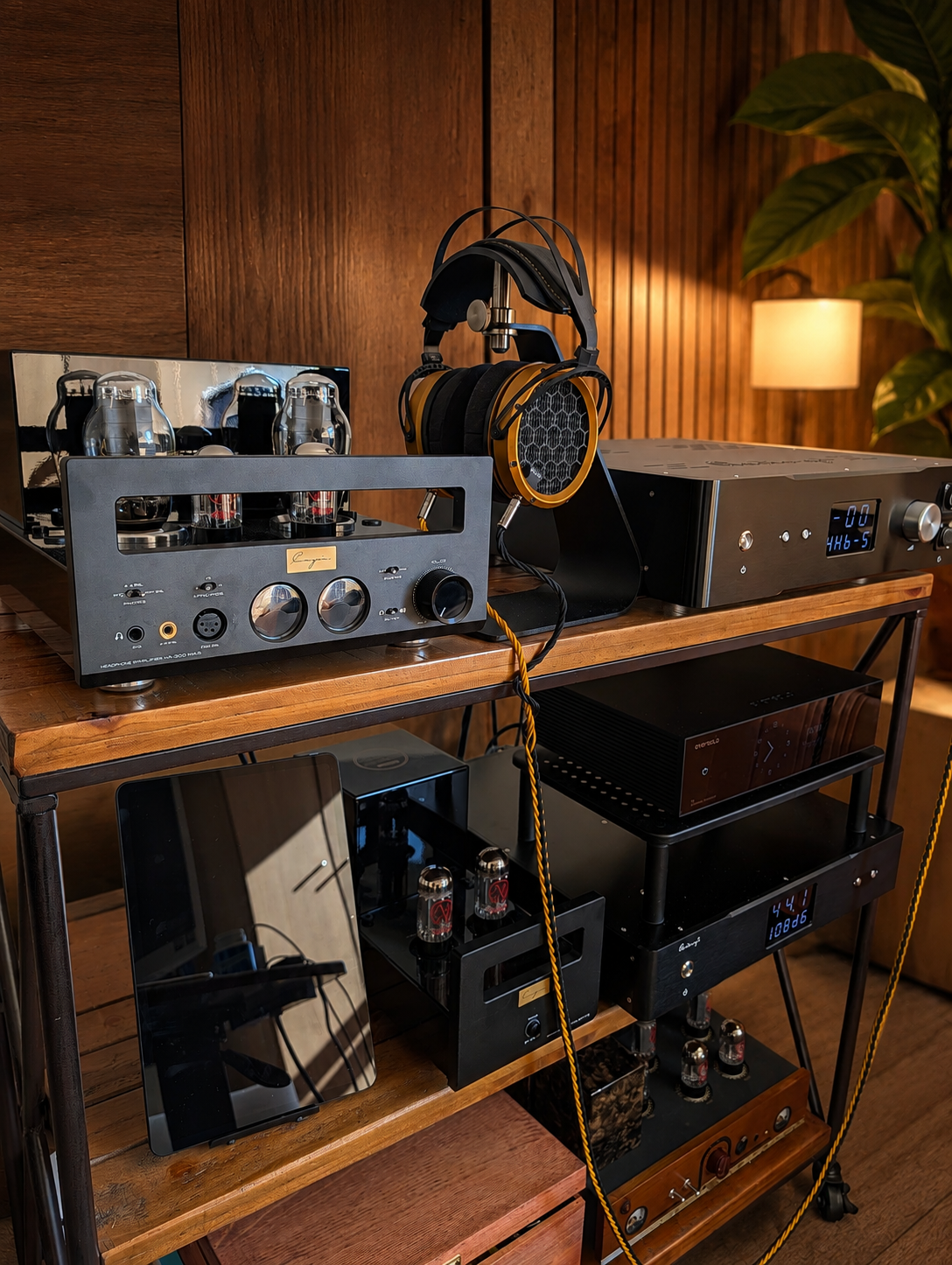
The full rack is around 100kg/220lbs right now which is not that easy to move. Not exactly a desktop friendly setup anymore.
Conclusion
I love my Aegis and it is not easy to write this down, but ultimately the HA300 MK3 is the more advanced amplifier. I can’t recommend the Aegis on the UK market where the price is the same for these two amplifiers. On other markets where there is a significant difference in price, there is still a strong argument for the Aegis. It is a spectacularly organic-sounding amp that excels at macro dynamics. It has a special synergy with ZMF headphones and, on some markets, is significantly cheaper, which can be a strong deciding factor for more budget-conscious buyers.
On the other hand, if you are chasing a higher level of refinement, better detail retrieval in a natural form, balance, effortless extension, even more realistic and almost palpable timbre and texture, and that ‘being there’ experience in your music listening sessions, I think the HA300 is well worth the money even if you have to pay a few hundred £/$/€ more for it in your country.
I think the HA300, both in the UK and in the USA, represents excellent value. The Feliks Envy might sound a little more detailed, technical and a bit more spacious, while it is also more neutral, but it also costs twice as much (!). And in fact, I prefer the sweeter tonality of the Cayin. I never really fancied the popular Envy; I think perhaps the solid-state rectification holds it back for me. After hearing the HA300 MK3, I can see even fewer reasons to pay twice as much for the Envy. Perhaps if you are chasing ultimate detail retrieval, go for it. But pound for pound, I would pick the Cayin.
The newest HA300 sounds engaging, refined, with natural elegance and a hint of sweet 300B euphony. It satisfies not just most people’s but most audiophiles’ technical needs while maintaining a highly natural, sweet and engaging presentation. The value proposition in the USA and UK is exceptional. What more could you wish for? This amp deserves more attention!